

Recruitment teams are under pressure to screen more candidates while maintaining fair and consistent evaluation. As application volumes continue to rise, many organizations are turning to AI-driven assessment platforms to evaluate candidates more efficiently and consistently.
Recent HR research shows that 43% of organizations now use artificial intelligence across HR tasks, with recruitment being one of the most common applications as companies try to manage high application volumes and improve hiring efficiency.
Yet many teams still juggle multiple testing tools, video interview platforms, and evaluation frameworks that rarely integrate smoothly. Before adopting another tool, it is worth taking a step back and reviewing the top AI assessment platforms available today and how they help recruiters measure candidate skills, cognitive abilities, and behavioral competencies more effectively.
What Is an AI Assessment Platform
An AI assessment platform is a digital system that uses artificial intelligence, analytics, and structured evaluation frameworks to assess job candidates through multiple testing methods.
These platforms allow recruiters to measure cognitive abilities, behavioral traits, technical skills, and decision making through structured digital assessments.
Unlike traditional testing systems that deliver a fixed exam, modern AI assessment platforms can analyze job requirements, recommend evaluation methods, automate scoring, and produce insights that support hiring decisions.
The objective is to create a consistent evaluation process while reducing manual screening work for recruiters.
Recruiters rely on AI assessment platforms for several hiring scenarios including graduate hiring, technical recruitment, volume hiring, leadership selection, and internal mobility programs, with market forecasts projecting the sector to grow at a 15.1% CAGR and reach $3.7 billion by 2033.
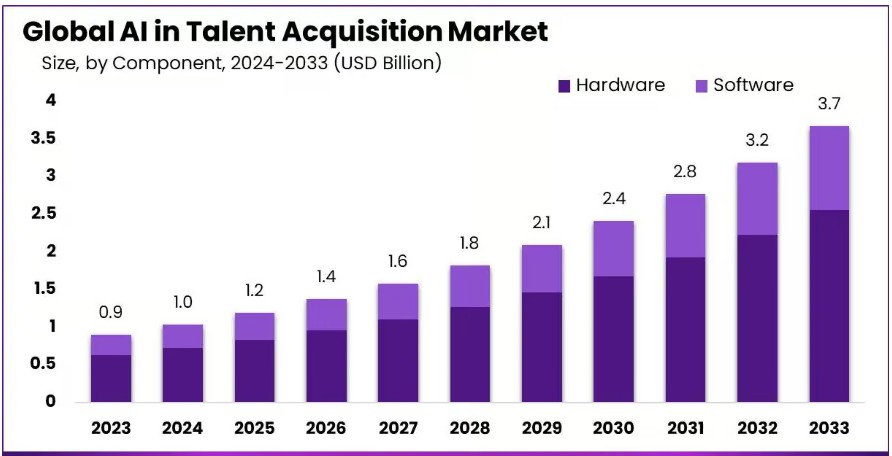
market.us report
Key Features of AI Assessment Platforms
A well designed AI assessment platform combines several capabilities that improve evaluation quality while maintaining candidate engagement. Recruiters should evaluate platforms based on features that strengthen measurement accuracy and operational efficiency.
Structured Competency Measurement
The best AI assessment platforms evaluate candidates against clearly defined competencies. These may include cognitive ability, behavioral traits, communication skills, and job specific knowledge. Structured frameworks help organizations maintain consistency across roles and hiring teams.
Ability to Run Multiple Assessments
A strong platform allows organizations to combine several evaluation methods within a single workflow. These may include cognitive assessments, situational judgment tests, technical tasks, behavioral simulations, or structured interviews. This flexibility supports different hiring scenarios.
Engaging Candidate Experience
Candidate engagement is increasingly important. Platforms that use gamification, simulations, or interactive scenarios often achieve higher completion rates and stronger employer branding outcomes compared to static multiple choice testing.
Integration With Hiring Systems
AI assessment platforms should integrate with applicant tracking systems, HRIS platforms, and recruitment tools. Integrations help recruiters embed assessments directly within hiring workflows instead of managing multiple disconnected tools.
Insight Driven Reporting
Modern platforms produce analytics that help recruiters interpret results quickly. Insight dashboards may include benchmarking, competency scoring, and performance comparisons across candidate pools.
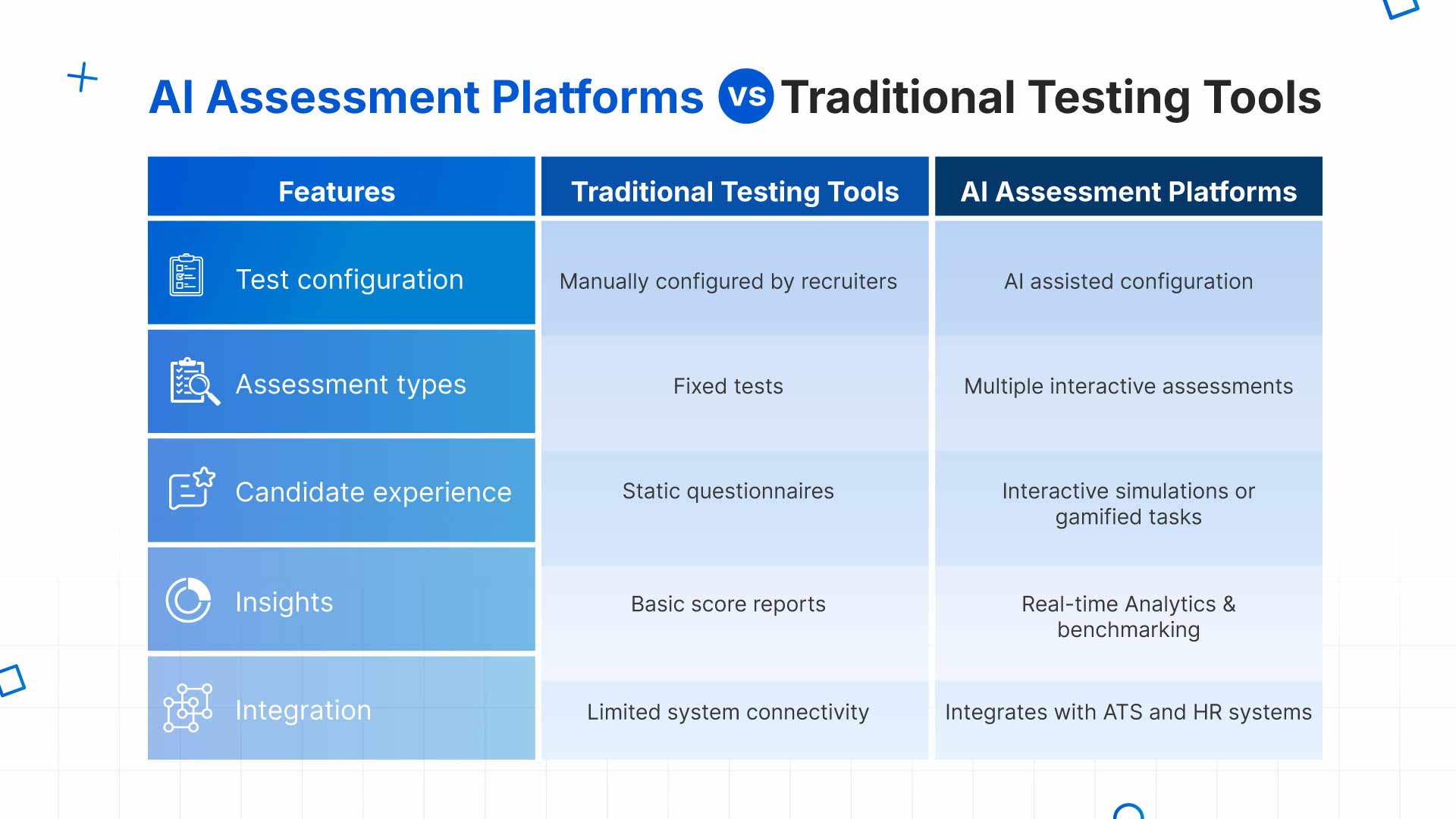
Organizations evaluating AI assessment platforms should look beyond individual tests and assess how well the platform supports broader hiring workflows.
Top 9 AI Assessment Platforms in 2026 for Recruiters
The global assessment technology market continues to expand as organizations adopt structured hiring methods. Enterprise recruiters now seek platforms that combine AI insights, engaging candidate experiences, and flexible assessment design.
Here are the top AI assessment platforms in 2026 for recruiters and talent acquisition teams.
1. C-Factor AI
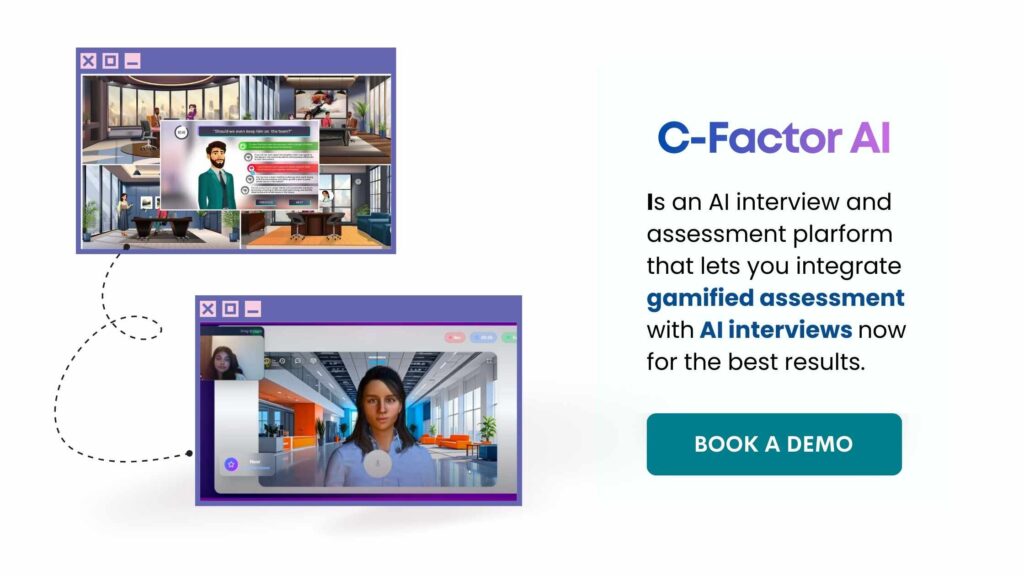
Developed by The Talent Games, C-Factor AI is an AI powered assessment intelligence platform designed to help organizations configure and conduct structured hiring assessments. The platform combines AI guided assessment design with gamified evaluation methods and interactive interview modules.
C-Factor AI includes several capabilities that support comprehensive candidate evaluation. Recruiters can conduct video interviews, voice interviews, gamified assessments, and situational judgment simulations within the same platform. Gamified assessments measure cognitive ability and behavioral competencies through interactive game environments that increase engagement and completion rates.
The platform also features AI agents with distinct personas that guide candidates through the assessment process. This creates a more engaging evaluation experience while maintaining structured measurement logic. Recruiters can customize questions and competency frameworks based on role requirements.
Another strength of C-Factor AI is its human in the loop evaluation approach. AI assists with scoring and insights while recruiters maintain final decision authority. The platform was developed by our experienced team at The Talent Games, a company that has spent more than eight years building gamified talent assessment technologies that has candidate satisfaction score of upto 9.5 out of 10.
| Key AI tools and capabilities |
|---|
|
AI-powered assessment configuration based on job descriptions |
|
AI video, voice, and chat interviews for structured candidate evaluation |
|
Gamified cognitive and behavioral assessments |
|
AI-generated interview questions and customizable workflows |
|
Automated candidate scoring and benchmarking |
|
Hiring insights and analytics dashboards |
How to get maximum value from C-Factor AI:
Organizations often achieve stronger insights by combining AI configured interviews with C-Factor gamified assessments, allowing recruiters to evaluate both behavioral and cognitive capabilities within a single assessment journey.
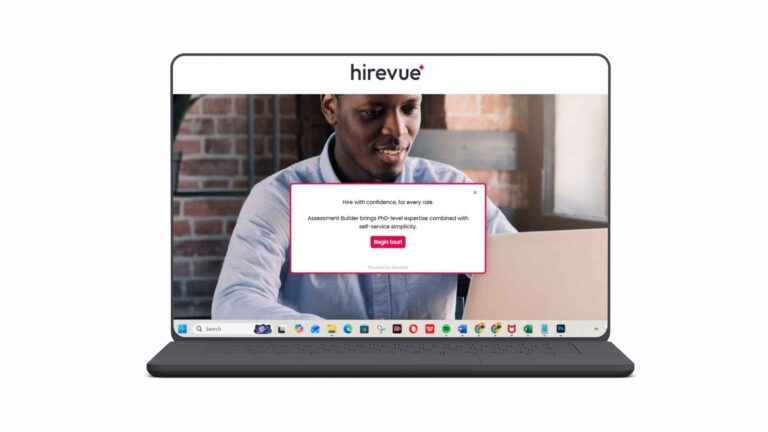
2. HireVue
The platform from HireVue is widely known for its video interviewing technology combined with AI driven assessment features. Recruiters can evaluate communication skills, behavioral responses, and technical abilities through structured interview workflows.
HireVue also offers coding assessments and game based cognitive testing modules. Many enterprise organizations use the platform to manage early career hiring programs and high volume recruitment initiatives.
One limitation often discussed by recruiters involves the complexity of configuring multiple assessment types across large hiring programs. Some organizations supplement the platform with additional testing tools when deeper behavioral measurement is required.
| Key AI tools and capabilities |
|---|
|
AI-powered assessment builder that recommends tests based on job descriptions |
|
AI video interviews that automatically ask follow-up questions and analyze responses |
|
AI resume scoring to rank candidates based on job relevance |
|
AI auto-scoring for open-ended responses and custom questions |
How to get maximum value from Hirevue:
Design structured interview question sets and train hiring teams to review recorded responses consistently. Practicing structured behavioral questions and reviewing responses using clear competency criteria helps recruiters extract stronger insights from asynchronous video interviews.
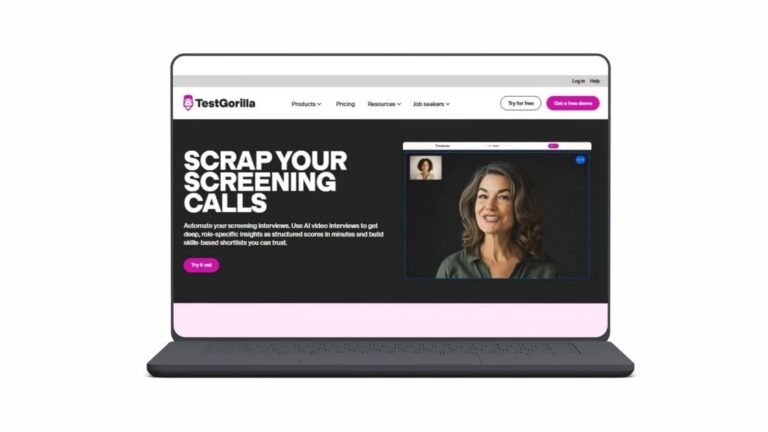
3. TestGorilla
TestGorilla provides a large library of pre built assessments covering cognitive ability, language skills, programming knowledge, and personality traits. The platform focuses on helping recruiters quickly screen candidates through structured online testing.
Recruiters appreciate the wide variety of tests and the ability to combine multiple assessments within a single hiring workflow. The platform also integrates with several applicant tracking systems.
However, the candidate experience tends to remain largely questionnaire based, which can affect engagement levels during longer testing processes.
| Key AI tools and capabilities |
|---|
|
AI-powered assessment builder that recommends tests based on job descriptions |
|
AI video interviews that automatically ask follow-up questions and analyze responses |
|
AI resume scoring to rank candidates based on job relevance |
|
AI auto-scoring for open-ended responses and custom questions |
How to get maximum value from TestGorilla:
Use the platform’s assessment library to build role specific test combinations that reflect real job requirements. Skills based hiring frameworks that measure practical ability instead of resumes tend to produce more reliable candidate comparisons.
4. Paradox
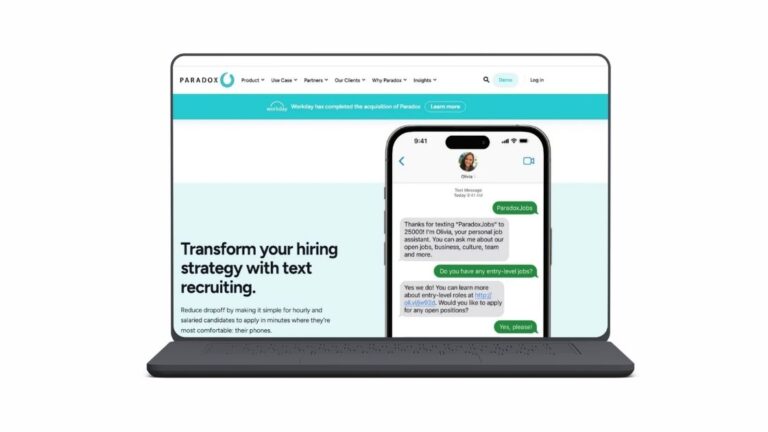
Paradox is known for its conversational AI assistant that helps recruiting teams automate candidate communication and scheduling.
The platform’s AI assistant, Olivia, interacts with candidates through chat interfaces to answer questions, screen applicants, and coordinate interviews.
Many organizations use Paradox for high-volume hiring environments such as retail, hospitality, and customer service roles where rapid response times and simplified candidate communication significantly improve application completion rates.ns rely on SHL for scientifically validated testing frameworks and global benchmarking data.
The platform provides strong analytics for large organizations running structured hiring programs.
Implementation complexity can be a consideration for smaller teams due to the breadth of the product suite.
| Key AI tools and capabilities |
|---|
|
Conversational AI chatbot for candidate screening |
|
Automated interview scheduling assistant |
|
AI-driven candidate communication workflows |
|
Text-based and chat-based recruiting interfaces |
How to get maximum value from Paradox:
Design conversational workflows that mirror real recruiter conversations. Clear screening questions and structured chat interactions help the AI assistant guide candidates efficiently through the application and interview scheduling process.
5. Juicebox
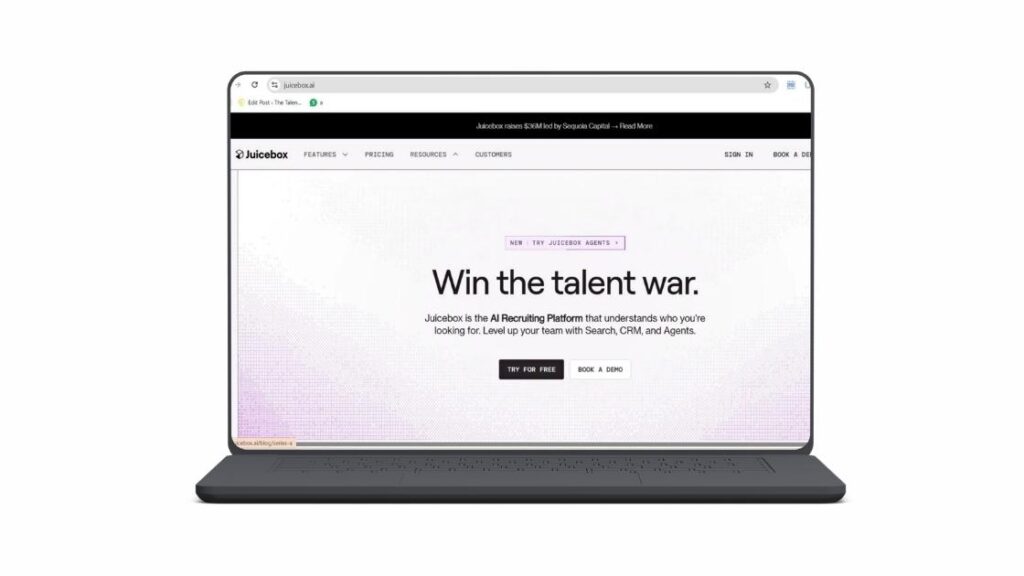
Juicebox is an AI-powered sourcing platform that helps recruiters discover and engage potential candidates through intelligent search and automated outreach. Instead of relying on manual sourcing across multiple databases, recruiters can generate candidate shortlists using AI-driven talent discovery tools and launch outreach campaigns directly from the platform. This approach helps recruiting teams build pipelines more efficiently.
| Key AI tools and capabilities |
|---|
|
AI-powered candidate sourcing engine |
|
Smart shortlist generation for talent discovery |
|
Automated email outreach campaigns |
|
AI-assisted outreach message suggestions |
How to get maximum value from Juicebox:
Continuously refine candidate search parameters and monitor shortlist results to improve sourcing accuracy and identify stronger candidate profiles.
6. hireEZ
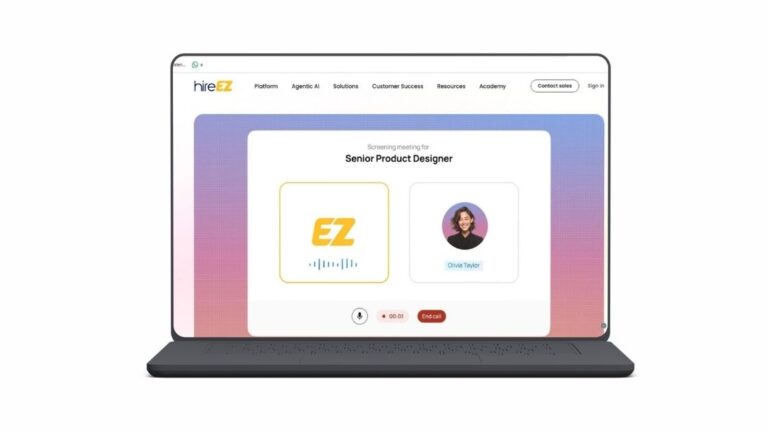
hireEZ is an AI-driven talent sourcing and engagement platform designed to help recruiters identify and attract passive candidates across global talent pools.
The system aggregates candidate data from numerous professional networks and databases while providing CRM functionality to manage engagement campaigns. Many recruiting teams use hireEZ to maintain structured candidate pipelines and improve outreach efficiency.
| Key AI tools and capabilities |
|---|
|
AI-powered talent sourcing across multiple databases |
|
Candidate matching based on skills and experience |
|
Diversity and inclusion sourcing filters |
|
Recruitment CRM for managing candidate engagement |
How to get maximum value from hireEZ:
Segment candidate pipelines by skills and experience levels so outreach campaigns can be tailored more effectively to different talent segments.
7. Fetcher
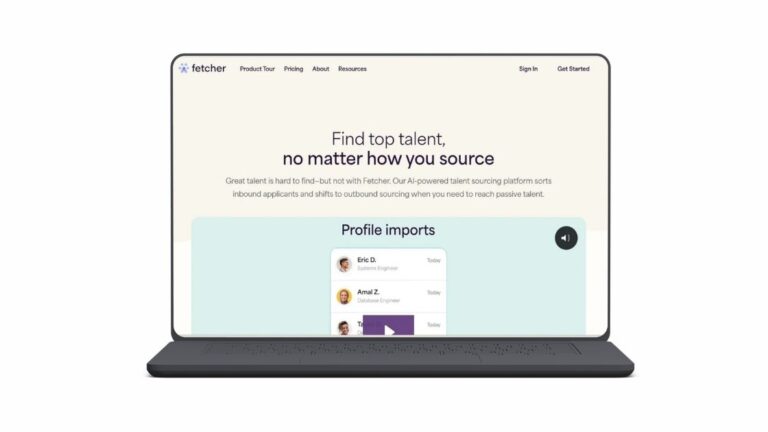
Fetcher focuses on AI-assisted outbound recruiting by combining candidate sourcing with automated outreach campaigns. The platform helps recruiters identify potential candidates through machine learning models and then initiate personalized outreach sequences.
Many organizations use Fetcher to supplement their recruiting efforts when internal teams need additional support sourcing specialized talent.
| Key AI tools and capabilities |
|---|
|
AI-powered candidate sourcing recommendations |
|
Automated candidate outreach campaigns |
|
Machine learning talent matching algorithms |
|
Analytics dashboards for response tracking |
How to get maximum value from Fetcher:
Track outreach performance metrics such as response rates and engagement levels to refine messaging strategies and improve candidate interaction outcomes.
8. Manatal
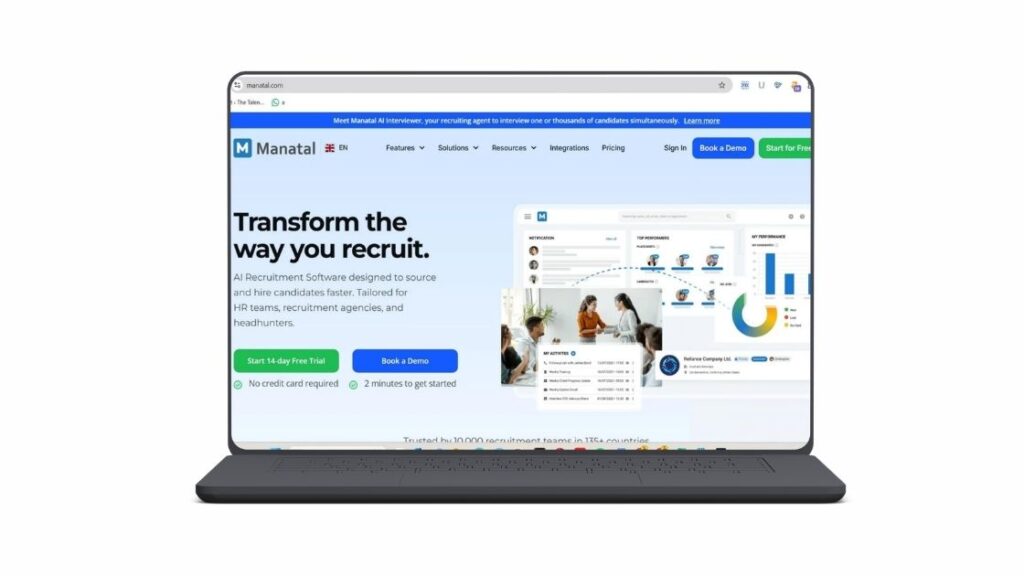
Manatal is a cloud-based applicant tracking system that includes AI-driven candidate scoring to help recruiters prioritize applicants more efficiently.
The platform combines recruitment pipeline management with candidate enrichment features that collect publicly available professional data. This allows hiring teams to gain additional insight into applicants while managing recruitment workflows.
| Key AI tools and capabilities |
|---|
|
AI candidate scoring and ranking |
|
Drag-and-drop recruitment pipeline management |
|
Machine learning talent matching algorithms |
|
Analytics dashboards for response tracking |
How to get maximum value from Manatal:
Define clear scoring criteria based on role requirements so the AI ranking system prioritizes candidates who align most closely with job expectations.
9. Workable
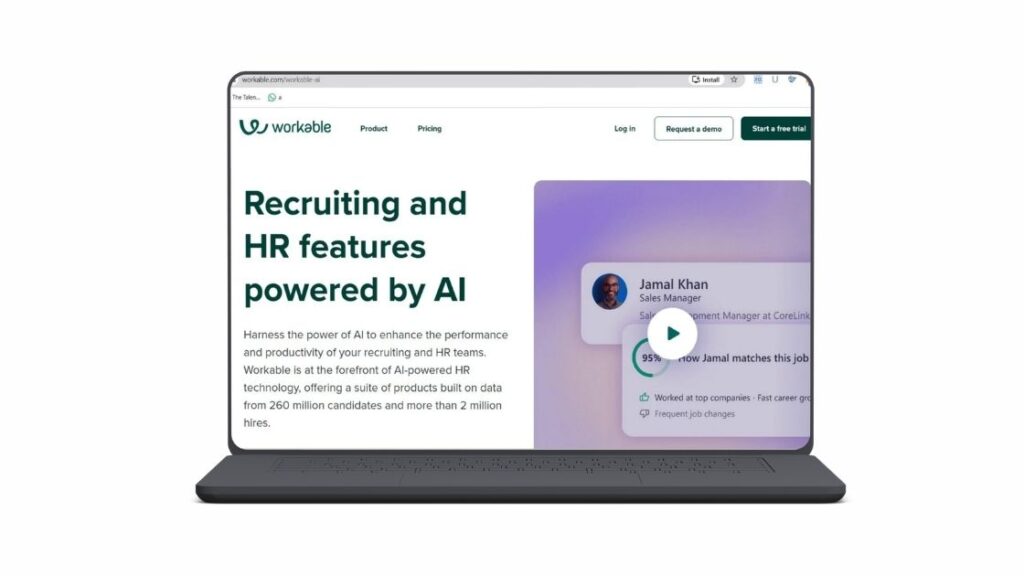
Workable is a recruitment platform that combines applicant tracking, candidate sourcing, and AI-assisted hiring tools within a single system.
Organizations use Workable to manage job postings, evaluate applicants, conduct video interviews, and collaborate across hiring teams. Its integrated approach helps recruiters maintain visibility across the entire hiring process.
| Key AI tools and capabilities |
|---|
|
AI candidate recommendation engine |
|
Drag-and-drop recruitment pipeline management |
|
Recruitment analytics and pipeline reporting |
|
Analytics dashboards for response tracking |
How to get maximum value from iMocha:
Leverage the platform’s extensive skills library to design assessments tailored to emerging technologies and niche skill sets. With thousands of available skill tests, recruiters can build highly specialized evaluations for modern digital roles.
Comparison of Leading AI Assessment Platforms
| Platform | Primary Strength | Best Use Case |
|---|---|---|
|
AI configured assessments with gamified evaluation |
Early careers and behavioral assessment |
|
|
HireVue |
Video interviewing with AI analysis |
Volume hiring and interview automation |
|
TestGorilla |
Large library of screening tests |
Quick candidate screening |
|
SHL |
Scientifically validated psychometrics |
Enterprise hiring programs |
|
Harver |
Predictive hiring assessments |
High volume recruitment |
|
Codility |
Developer skill testing |
Engineering hiring |
|
Criteria Corp |
Cognitive and personality testing |
Mid sized hiring programs |
|
HackerRank |
Coding and engineering assessments |
Technical recruitment |
|
iMocha |
Skill based testing library |
Global skill evaluation |
Choosing the Right AI Assessment Platform
Recruiters should evaluate AI assessment platforms based on hiring volume, assessment objectives, and candidate experience goals. Some platforms focus heavily on technical skill evaluation while others emphasize behavioral measurement or interview automation.
Organizations seeking deeper insight into cognitive ability, behavioral competencies, and decision making patterns may benefit from platforms that combine AI driven assessment configuration with interactive evaluation methods.
Hiring decisions improve significantly when organizations combine structured competency measurement with engaging assessment experiences. AI should support recruiters with insights while preserving human judgment.
Paul Keijzer, CEO The Talent Games
Conclusion
AI assessment platforms are becoming essential tools for organizations that need to evaluate talent consistently at scale. Recruiters are increasingly looking for platforms that integrate multiple evaluation methods while maintaining candidate engagement and clear decision insights.
Among the leading solutions available today, C-Factor AI stands out for its combination of AI driven assessment intelligence, gamified evaluations, and customizable interview workflows. Organizations that integrate structured assessments into their hiring strategy can significantly improve evaluation quality and hiring outcomes in the coming years.
FAQs
How should recruiters evaluate the effectiveness of an AI assessment platform?
Recruiters should evaluate AI assessment platforms based on predictive validity, candidate completion rates, quality of hire outcomes, and recruiter efficiency. Platforms that connect assessment performance with post-hire performance metrics tend to deliver the most meaningful insights for long-term hiring success.
What competencies should AI assessment platforms measure for modern roles?
Modern AI assessment platforms should measure a combination of cognitive ability, behavioral competencies, situational judgment, and role-specific technical skills. This combination allows recruiters to evaluate both candidate capability and workplace decision-making patterns.
How can recruiters integrate AI assessment platforms into existing hiring workflows?
Most organizations integrate AI assessment platforms with applicant tracking systems so that assessments can be triggered automatically at specific stages of the recruitment pipeline. This allows recruiters to evaluate candidates without disrupting existing hiring processes.
When in the hiring process should AI assessments be used?
AI assessments are most effective when used early in the hiring funnel to screen large applicant pools and again later to validate competencies during structured interviews. This layered approach allows recruiters to identify high-potential candidates more efficiently.
How do AI assessment platforms support high-volume hiring programs?
AI assessment platforms enable recruiters to screen thousands of applicants through automated interviews, cognitive assessments, and behavioral simulations. This helps hiring teams evaluate candidates consistently while maintaining a structured selection process.
How can recruiters ensure fairness and transparency when using AI assessments?
Recruiters should select platforms that provide structured scoring frameworks, explainable analytics, and human oversight in decision-making. Transparent scoring models help ensure that AI insights support recruiters rather than replacing professional judgment.
What role does candidate experience play in AI-driven assessments?
Candidate experience has become a major factor in hiring technology adoption. Platforms that use interactive simulations, gamified assessments, or conversational AI interfaces often improve candidate engagement and reduce assessment dropout rates.
How can AI assessment platforms support early careers and graduate hiring?
Graduate hiring programs often receive thousands of applications. AI assessment platforms help recruiters evaluate cognitive ability, learning potential, and behavioral competencies efficiently while maintaining a consistent evaluation process across candidates.
What data insights can recruiters gain from AI assessment platforms?
Most AI assessment platforms provide analytics dashboards that track candidate performance, benchmark applicants against competency frameworks, and identify patterns across hiring campaigns. These insights help recruiters refine hiring strategies over time.
How should organizations compare different AI assessment platforms?
Recruiters should compare platforms based on assessment variety, AI capabilities, integration flexibility, candidate engagement features, and reporting quality. Platforms that combine multiple evaluation methods often provide deeper insights into candidate potential.